

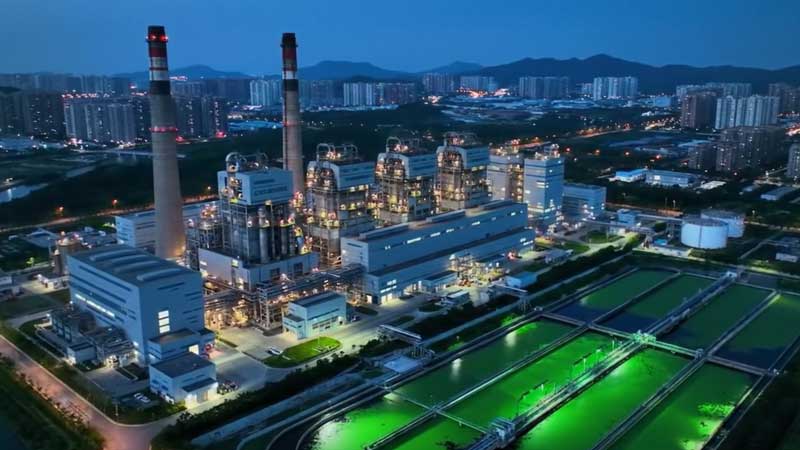
Technology Comparison
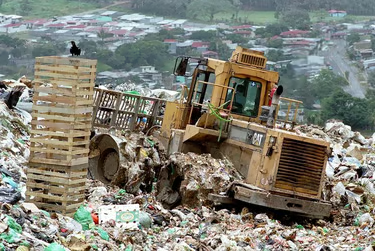
LandfillS, Dumpsites & Leachates Crisis
Traditional dumpsites pollute critical freshwater zones, generate toxic leachates, and release massive greenhouse gases.
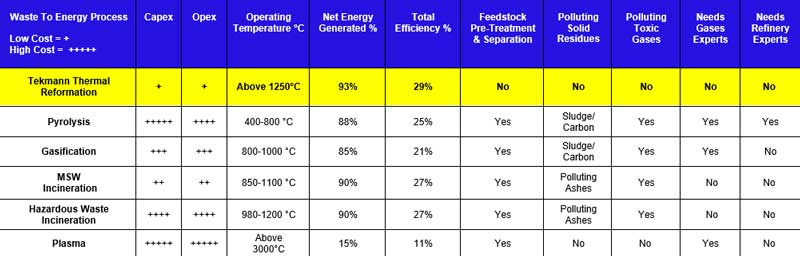
Standard incineration alternatives fail to reach temperatures required to neutralize hazardous materials, leaving behind highly toxic ash liabilities, while poisoning land & people.
Our Solution: Tekmann Thermal REformation
Our systems obtain continuous energy directly from raw solid, liquid, and gaseous feedstock inputs without requiring manual sorting.
By operating above 1250C°, the system completely eliminates toxic byproducts and leaves behind zero landfill waste.
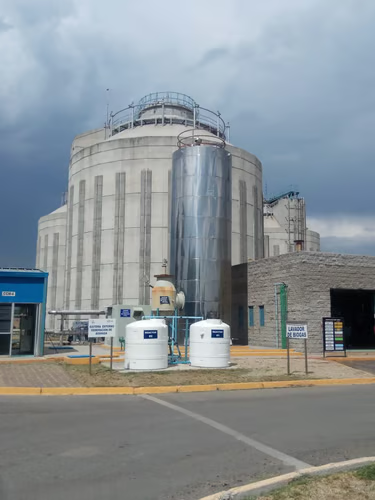
BENEFITS
Direct Feedstock Processing
Completely eliminates manual sorting and complex pre-treatment separation phases. Handles raw municipal solid waste, industrial streams, and agricultural biomass directly.

Zero Residues
Destroys hazardous materials completely at extreme high-thermal thresholds. Converts 100% of input materials into clean energy & circular resources.

Low Capex & Opex
Outperforms traditional gasification, pyrolysis, and plasma systems on raw capital requirements. Lowers operational overhead while maximizing net energy generation.

Adaptable Outputs
Modular adaptability seamlessly outputs multiple high-value revenue streams. Delivers grid-ready baseload electricity, high-grade bio-fuels, and organic biofertilizers.
Waste to Energy FAQ
How does Tekmann's WTE technology differ from standard mass burn incineration?
Traditional incinerators typically operate between 850C and 1100C, which fails to completely destroy highly toxic compounds and results in hazardous ash residues. Tekmann Thermal Reformation operates continuously above 1250C, completely shattering complex toxic molecules to ensure clean, zero-landfill emissions.
Does the waste require extensive sorting or drying before entering the system?
No. Unlike pyrolysis, gasification, or standard recycling frameworks, our solutions removes the need for costly pre-treatment sorting & separation loops. The system processes mixed raw municipal solid waste, liquids, and agricultural residues as they arrive.
What types of actionable commercial outputs does a Tekmann WTE plant produce?
Beyond delivering continuous, weather-independent electrical power, the thermal process outputs heating or cooling, high-density biofuels, and biofertilizers or biosubstrates.
How does the system perform economically compared to alternative technologies?
It offers significantly lower Capex & Opex profiles metrics than complex plasma or multi-stage gasification architectures. It captures a highly efficient net operating energy yield of up to 93% from feedstock.